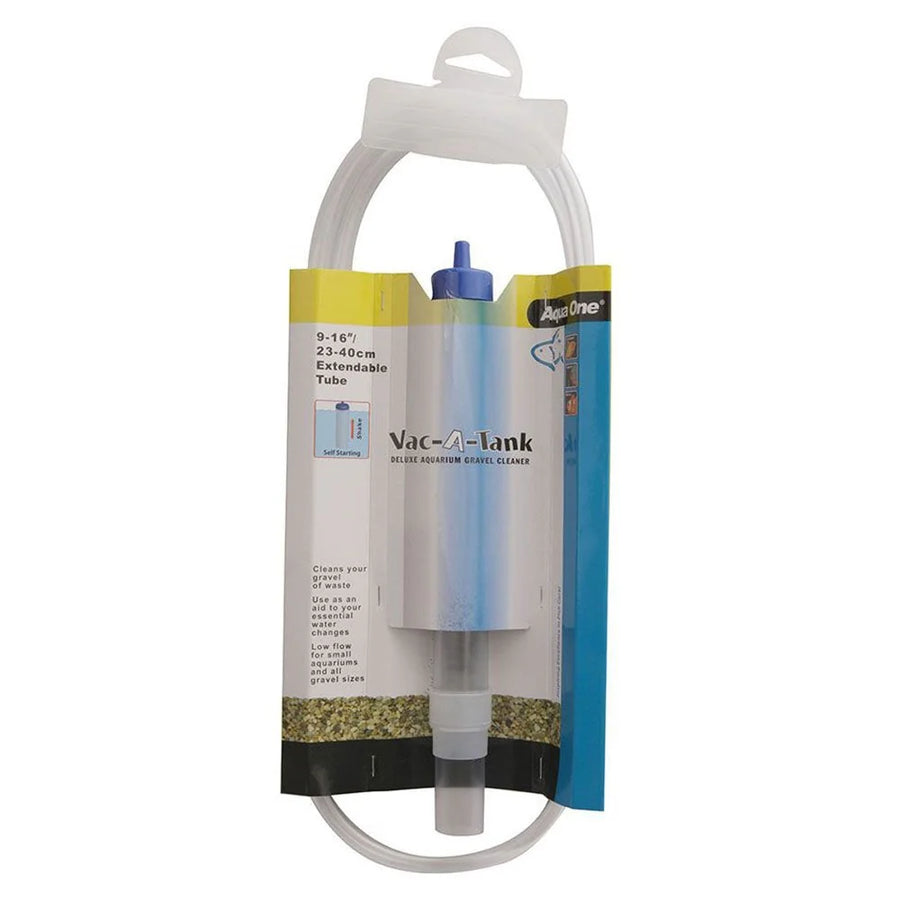

Description
USER GUIDE
The AquaOne Gravel Cleaner is an essential tool for maintaining the health and clarity of your aquarium. It works by using the principle of a syphon to simultaneously extract waste and detritus from your gravel bed while removing excess water for your routine water change. Regular use ensures a pristine substrate and healthy water quality.
KEY FEATURES AND COMPONENTS
The standard AquaOne gravel cleaner (often referred to as a gravel syphon) typically consists of three main parts:
- Cleaning Tube (The Bell): The large, rigid plastic cylinder that is submerged into the water. Its diameter allows water to flow rapidly while creating turbulence that draws lightweight rubbish (detritus, fish waste) up into the hose, leaving the heavier gravel behind.
- Flexible Syphon Hose: A long, clear, flexible tube that carries the water and extracted waste from the tank to the disposal bucket.
- Start Valve/Primer (Optional): Many modern AquaOne models include a manual pump or bulb, or a simple up/down plunger, designed to quickly establish the syphon flow without needing to suck-start the hose.
OPERATING INSTRUCTIONS
Follow these steps for effective and mess-free cleaning. Ensure your disposal bucket is placed lower than the aquarium water level to allow gravity to maintain the syphon.
Step 1: Preparation
- Place a large, clean bucket on the floor next to your aquarium. Ensure it can hold at least of your tank’s water volume, as this process performs your water change simultaneously.
- Switch off and unplug all electrical equipment, including the filter and heater, for safety.
- Secure the flexible hose’s outflow end into the bucket.
Step 2: Starting the Syphon
There are three common ways to start the flow, depending on your model:
- Using a Primer/Pump (If included): Submerge the bell entirely in the tank. Place the outflow end of the hose into the bucket. Rapidly pump the manual primer bulb or plunger several times until water begins flowing steadily through the hose into the bucket.
- The Submersion Method: Completely fill the bell and hose with water by fully submerging the entire unit horizontally. Pinch or seal the outflow end of the hose, lift the bell into the tank, and quickly place the outflow end into the bucket. Release the pinch, and the flow should start.
- The Bucket Method (Alternative): Fill the bell and hose with water. Place the bell into the tank. Quickly drop the outflow end of the hose into the disposal bucket on the floor.
Step 3: Cleaning the Gravel
- Once a steady syphon flow is established, place the bell end vertically into the gravel.
- Gently push the bell straight down into the substrate until it is buried by about to .
- Lift the bell slowly. The turbulence inside the tube will lift the lighter detritus while the heavier gravel drops back down.
- Repeat this process, moving methodically across a different section of the substrate each time, until the desired amount of water has been removed from the tank (typically of the total volume).
- If the tube becomes clogged, lift it out and shake it to clear the blockage before repeating the process.
Step 4: Finishing
- When you have removed the correct amount of water, pull the bell and hose out of the aquarium. Ensure the outflow end remains above the bucket until the flow stops to avoid splashing.
- Refill the aquarium with freshly conditioned water that matches the tank’s current temperature and parameters.
- Plug in and switch on your electrical equipment.
MAINTENANCE AND CARE
- Cleaning: After every use, thoroughly rinse the entire unit with clean tap water to remove any residual waste and prevent bacterial build-up.
- Storage: Store the cleaner straight or gently coiled to prevent kinking the flexible hose, which can impede future syphon flow.
- Inspections: Periodically check the flexible hose for cracks or tears, which would cause the syphon to fail.